Progress as it happens, straight from the build: clips, photos and what changed. Newest first.
Milestone provenWork in progress
ibara 0.1.0-20
Agents go by short names: Codex is codex@your-computer and Claude Code is claude@your-computer, instead of their programs’ long names, and their permissions and tasks carry over on update. An agent can reuse a request id in a new session, and resending the same request still returns the first result without doing it twice. The editor ibara opens now uses your own Mousepad settings; ibara turns off Mousepad’s session restore, which also turns off its autosave, so a restore prompt never takes an agent’s typing. Run ibara update, or read the release notes.
ibara 0.1.0-19
Agents can read long web pages. The page reader now reads a long article in well under a second where it used to take about half a minute, so agents are no longer told that no browser tab is available. The browser picks up the new page reader the next time it starts. The ibara skill also tells agents to make each request id unique and to check the text editor’s settings in the editor itself. Run ibara update, or read the release notes.
ibara 0.1.0-18
A first update, the same day. Remove Computer takes a computer off your fleet, and Add Computer offers Add Again for a computer you reinstalled. Agents can click the file manager’s and the text editor’s buttons and type into an app’s own popups, a check on a web page reads the whole page, and read-only tools are marked so your agent can allow them without asking you each time. The connect prompt now asks you to restart your agent when it can’t load new tools by itself; if you connected an agent before 0.1.0-17, paste the prompt to it once more. Run ibara update, or read the release notes.
ibara 0.1.0 is out
The first public release, 0.1.0-17, is on GitHub: the core under GPL-3.0 and the Omarchy console plugin under MIT. One command installs it on each computer and checks the release’s signature first. Any agent that can add an MCP server to its own settings connects itself from one prompt: it adds the ibara server, links the ibara skill and adds a short note to its instructions file, so every session knows when to use ibara. Install ibara or read the release notes.
A real recording, 33 seconds: the console follows Claude Code on another computer as it fills in a sign-up form, waits for approval before it sends it, then finishes. Waiting is sped up.
Why your agent should have its own computer
Computer use on the machine you’re sitting at has a basic problem: there’s one cursor and one keyboard. On Hyprland, as an Omarchy discussion put it this month, “an agent click or keypress steals focus.” You either stop working while it runs, or fight it for the mouse.
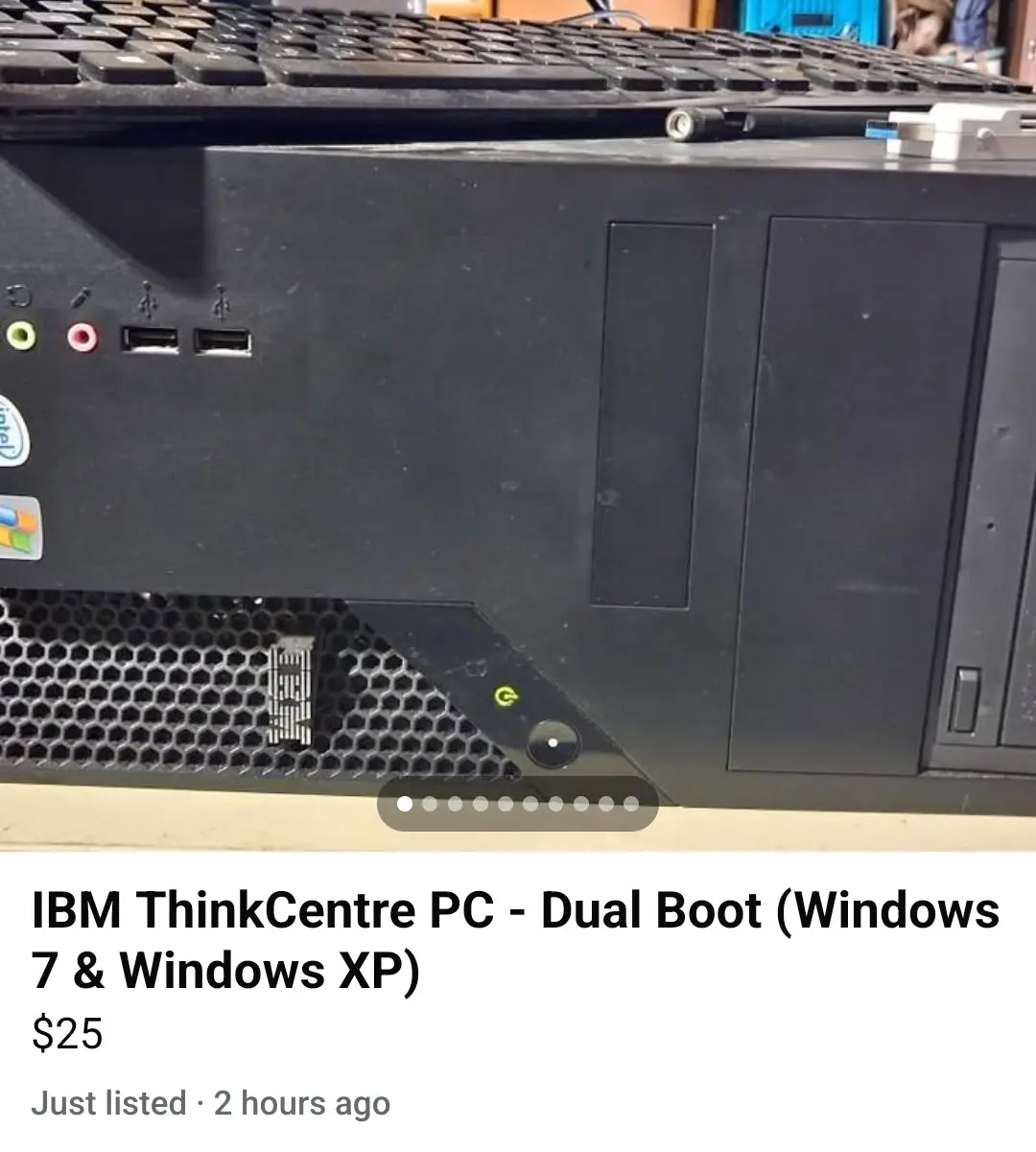
So ibara gives the agent a computer of its own. Mine are five-year-old mini PCs with 10-watt Celerons. The agent’s browser, apps and logins live there, my desktop stays fast, and my own accounts stay out of its reach. If it breaks something, it broke a spare.
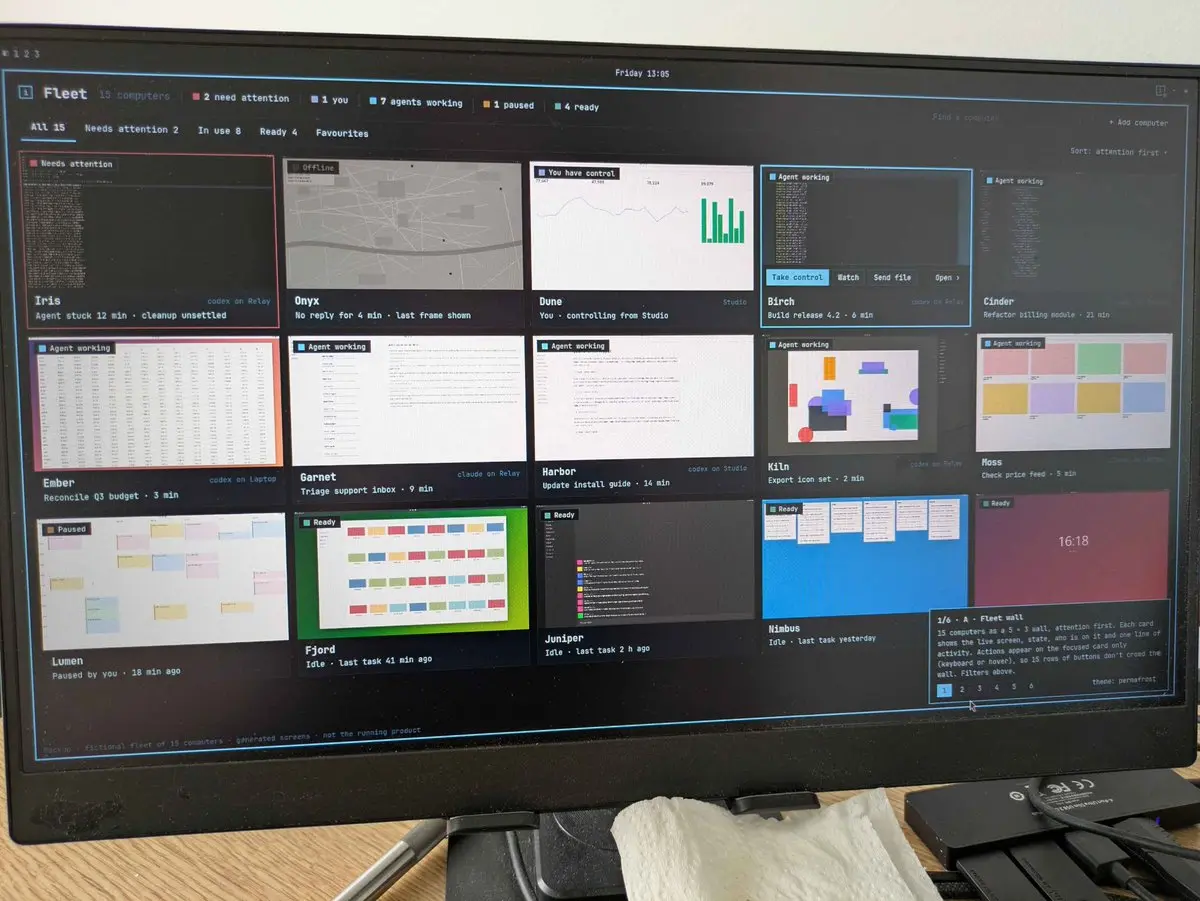
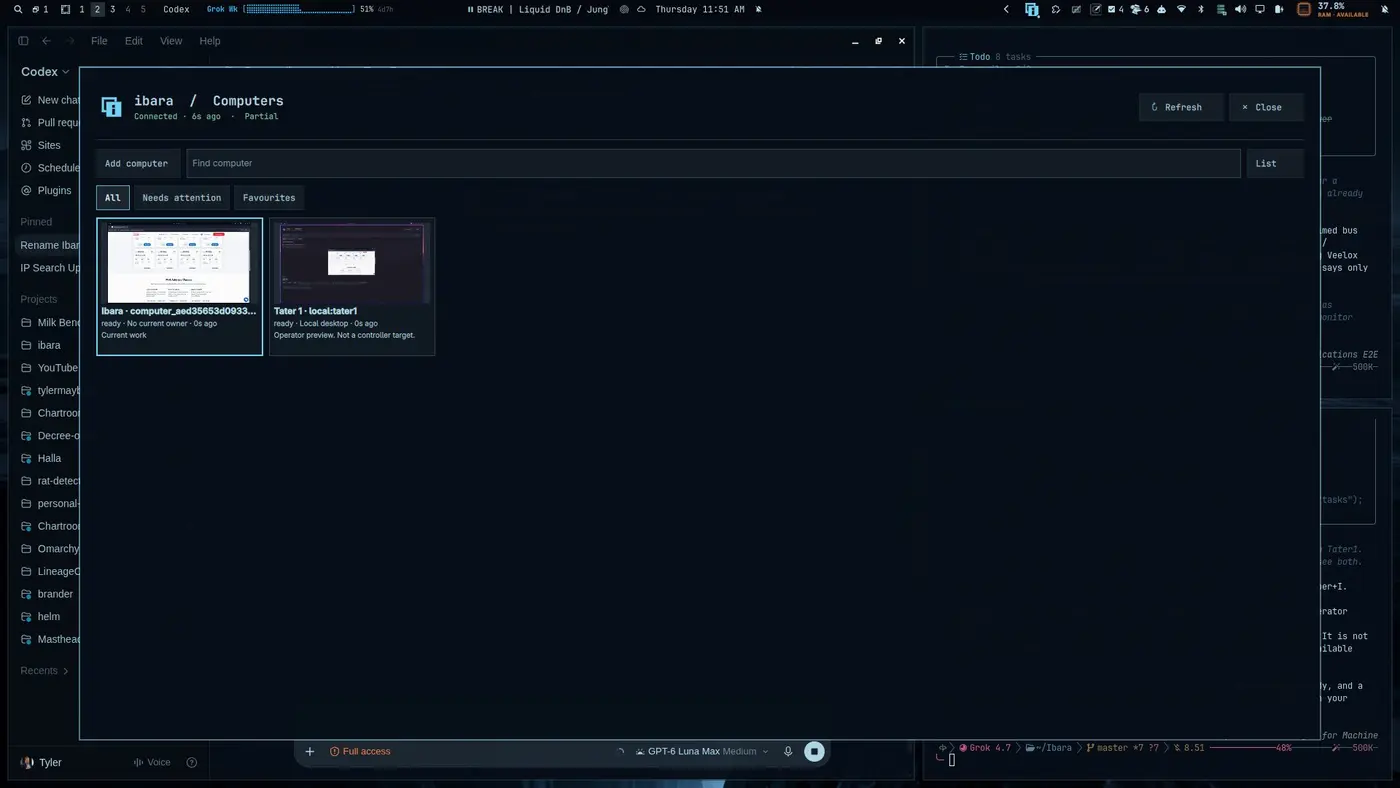
It isn’t a VM or a cloud desktop either. It’s real hardware on my home connection, with a real browser, and I can open its screen from the console, take control and hand it back. Give five agents a computer each and they all work at once.
That’s the whole idea. Your agent works there. You keep working here. Install ibara and give a spare its first task.
Real agents ran the first full benchmark: 73 runs of 12 tasks on both test machines, with Claude Code, Codex, omp and opencode. 49 passed, and 17 of the 24 failures were ibara bugs, now fixed. The console now shows an agent’s work as it happens, and Live Video (Preview) can play each computer’s screen as video. See the benchmarks.
Codex, Claude Code, opencode and omp each connected themselves from one prompt, then saved a file on another computer. All four connected and all five tasks completed.
Take control, streaming and hand back now pass on both test machines. Handing back no longer resumes an agent by itself, and reconnecting after hand back is refused.
“Give your agents instant computer use access to any Omarchy machine you own. I’m nearing the first release of ibara: an Omarchy-native computer use layer that turns your hardware into agent infrastructure. Today I’m integrating the awesome @trycua driver for computer use.”
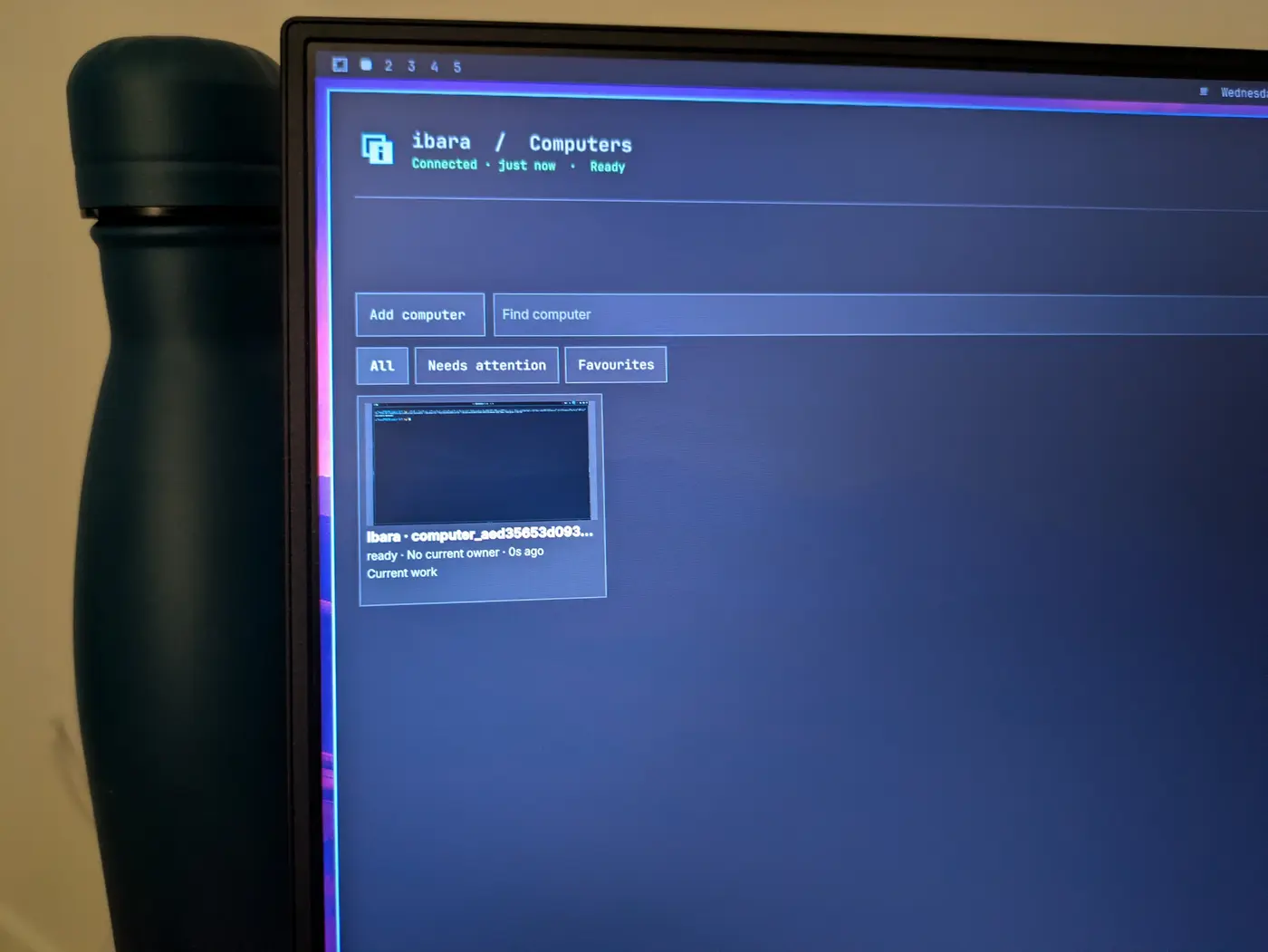
“Both potatoes are connected and visible. Computer use is solid still, mostly trying to make the connections, streaming, and takeover seamless. Then a good amount of UI cleanup and we’ll have our first release.”